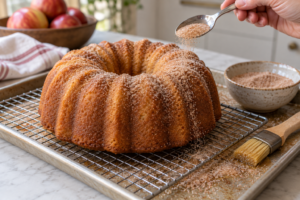
This apple cider donut cake brings the warm cinnamon-sugar finish of an orchard donut to a tender Bundt cake. Reduced apple cider gives the batter a deeper apple flavor, while applesauce and sour cream help keep each slice soft. A brush of butter holds cinnamon sugar over the top, sides, center ring, and base.
There is no mixer to pull out and no frosting to fuss with. Give yourself a little time to simmer and cool the cider, then the batter comes together with a whisk and spatula. It is a lovely cake for a weekend brunch, a fall gathering, or an afternoon slice with coffee.
Table of contents
- Why this apple cider donut cake works
- Ingredients and the right apple cider
- How to make apple cider donut Bundt cake
- Tips for an even cinnamon-sugar coating
- Substitutions and simple variations
- Troubleshooting
- Storage, freezing, and make-ahead tips
- Apple cider donut cake FAQs
- More apple baking ideas
- Apple Cider Donut Cake recipe card
Why this apple cider donut cake works
- Concentrated cider flavor: simmering 2 cups down to 1 cup adds apple flavor without pouring extra liquid into the batter.
- A familiar donut finish: butter and cinnamon sugar make a thin, sandy coating instead of a glaze.
- A simple mixing method: melted butter, oil, and a whisk keep preparation manageable.
- A cake for sharing: one 12-cup Bundt pan makes 12 slices with a smooth, spiced crumb.
This version is a full-size ring cake with reduced cider and a coating added after baking. It has no diced apples, cinnamon swirl, or crumb topping. If you are craving apple pieces and a vanilla glaze, the Apple Fritter Cake offers that different texture.
Timing: allow about 25 minutes of preparation, 20 to 30 minutes to reduce the cider, 45 to 55 minutes to bake, and 50 minutes of cooling and setting spread between the cider and cake. The recipe card uses a 2-hour-35-minute estimate. You can shorten baking-day preparation by reducing the cider ahead.
Ingredients and the right apple cider
Use nonalcoholic apple cider, the cloudy apple drink sold in the juice aisle or refrigerated section. Choose pasteurized cider when available. Apple cider vinegar is not a substitute, and hard cider has a different flavor and alcohol content.
Reduced cider
- 2 cups apple cider; nonalcoholic, preferably pasteurized; reduce to exactly 1 cup
Cake batter
- 3 cups all-purpose flour; spooned and leveled
- 2 teaspoons baking powder
- 1/2 teaspoon baking soda
- 2 teaspoons ground cinnamon
- 1/2 teaspoon ground nutmeg
- 3/4 teaspoon fine salt
- 1/2 cup unsalted butter; melted and cooled until just warm
- 1/4 cup neutral oil; such as canola or vegetable oil
- 1 cup granulated sugar
- 1/2 cup light brown sugar; packed
- 3 large eggs; at room temperature
- 1/2 cup unsweetened applesauce; at room temperature
- 1/2 cup sour cream; full-fat, at room temperature
- 2 teaspoons vanilla extract
Cinnamon-sugar coating
- 4 tablespoons unsalted butter; melted
- 1/2 cup granulated sugar
- 1 1/2 teaspoons ground cinnamon
For the pan
- baking spray with flour; or shortening and a light dusting of flour
The reduced cider appears once in the ingredient list: start with 2 cups, reduce to 1 cup, and add that full cooled cup to the batter. Do not add an extra cup of unreduced cider. Keep the cake sugar and coating sugar measured in separate bowls.
How to make apple cider donut Bundt cake
Equipment: a 12-cup Bundt pan, medium saucepan, heatproof liquid measuring cup, mixing bowls, whisk, rubber spatula, pastry brush, two cooling racks, and a rimmed sheet pan. Use a metal Bundt pan in good condition, with no badly scratched coating.
1. Reduce and cool the cider
Pour 2 cups apple cider into a medium saucepan. Bring to a gentle boil, then simmer uncovered over medium-low heat for about 20 to 30 minutes, stirring occasionally, until reduced to 1 cup. Carefully pour into a heatproof measuring cup to check the volume. If you have more than 1 cup, return it to the pan and simmer longer; if slightly under, add fresh cider to reach 1 cup. Cool for about 15 minutes, until lukewarm rather than hot.
2. Prepare the oven and Bundt pan
Heat the oven to 350°F with a rack in the lower-middle position. Use a 12-cup Bundt pan. Just before filling, thoroughly coat every flute and the center tube with baking spray containing flour, or brush with shortening and dust lightly with flour, tapping out excess. Do not use the cinnamon sugar to line the pan.
3. Mix the dry ingredients
Whisk the flour, baking powder, baking soda, 2 teaspoons cinnamon, nutmeg, and salt in a large bowl. Spoon flour into the measuring cups and level it rather than scooping a packed cup from the bag.
4. Combine the wet ingredients
In another large bowl, whisk the 1/2 cup melted butter, oil, 1 cup granulated sugar, and brown sugar until blended. Whisk in the eggs one at a time, followed by the applesauce, sour cream, vanilla, and all of the cooled 1 cup reduced cider. Small sour cream lumps are fine; break up large ones.
5. Fold and fill
Add the wet mixture to the dry ingredients. Fold gently with a spatula just until no dry flour remains, scraping the bottom of the bowl. Avoid beating the batter smooth. Spoon into the prepared pan and level the surface. Leave at least one-third of the pan empty for rising; never fill above two-thirds full.
6. Bake and check the center
Bake for 45 to 55 minutes, starting checks at 45 minutes. A skewer inserted into the thickest part of the ring should come out clean or with a few moist crumbs, not wet batter. Check a second spot. The surface should spring back lightly. If the cake browns too quickly, loosely cover it with foil and continue baking in 5-minute intervals until done.
7. Release the cake
Set the pan on a wire rack for 15 minutes. Gently loosen only the accessible outer edge and center tube with a thin silicone spatula. Place a rack over the pan, hold both securely with oven mitts, and invert. Lift the pan gently. Let the unmolded cake stand for another 10 minutes, until warm and sturdy enough to handle.
8. Coat with cinnamon sugar
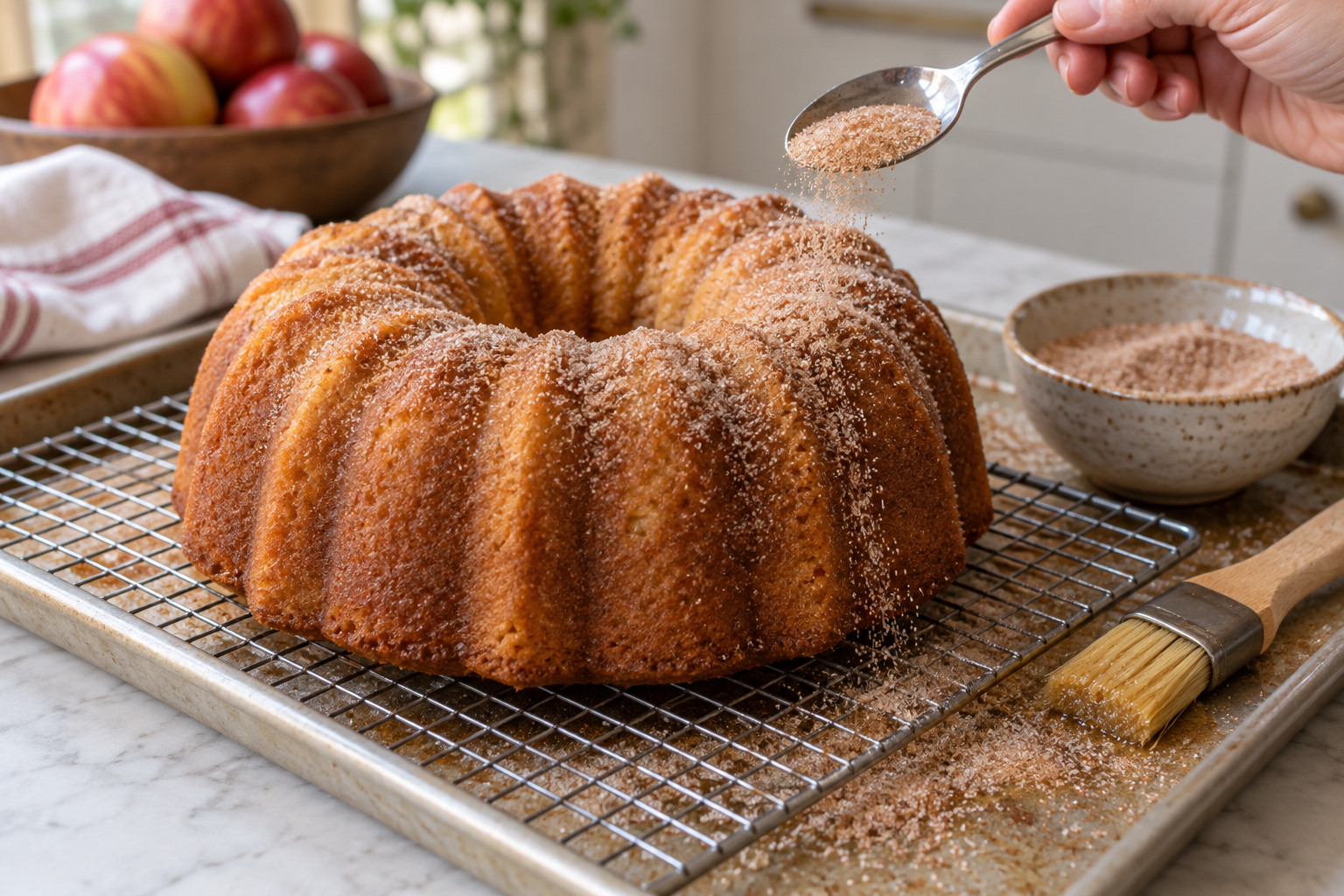
Stir 1/2 cup granulated sugar with 1 1/2 teaspoons cinnamon. Set the rack over a rimmed baking sheet. Brush the warm cake’s top, outer sides, and inner ring with the 4 tablespoons melted butter, working in small sections and immediately spooning or gently pressing on cinnamon sugar. To coat the flat base, carefully invert the sturdy cake onto a second rack, brush and sprinkle the base, then turn it upright again. Support it with racks rather than holding a hot cake in your hands. Let stand at least 10 minutes before slicing into 12 servings.
If a child is helping, save tasting for the baked cake. Raw flour and eggs can carry harmful bacteria. Wash hands, utensils, and counters after mixing; the FDA’s flour-handling guidance explains why uncooked batter should not be tasted.
Tips for an even cinnamon-sugar coating
- Coat warm cake, not steaming-hot cake. Excess heat can dissolve the sugar; a fully cold, dry surface makes it harder to attach.
- Work a section at a time. Brush on a thin layer of melted butter and immediately add sugar before moving around the ring.
- Catch the extra sugar. A rimmed sheet under the rack keeps the counter tidy and lets you scoop up clean fallen sugar for bare patches.
- Be gentle with the base. Wait until the cake feels sturdy before turning it with a second rack. If it is fragile, give it more cooling time.
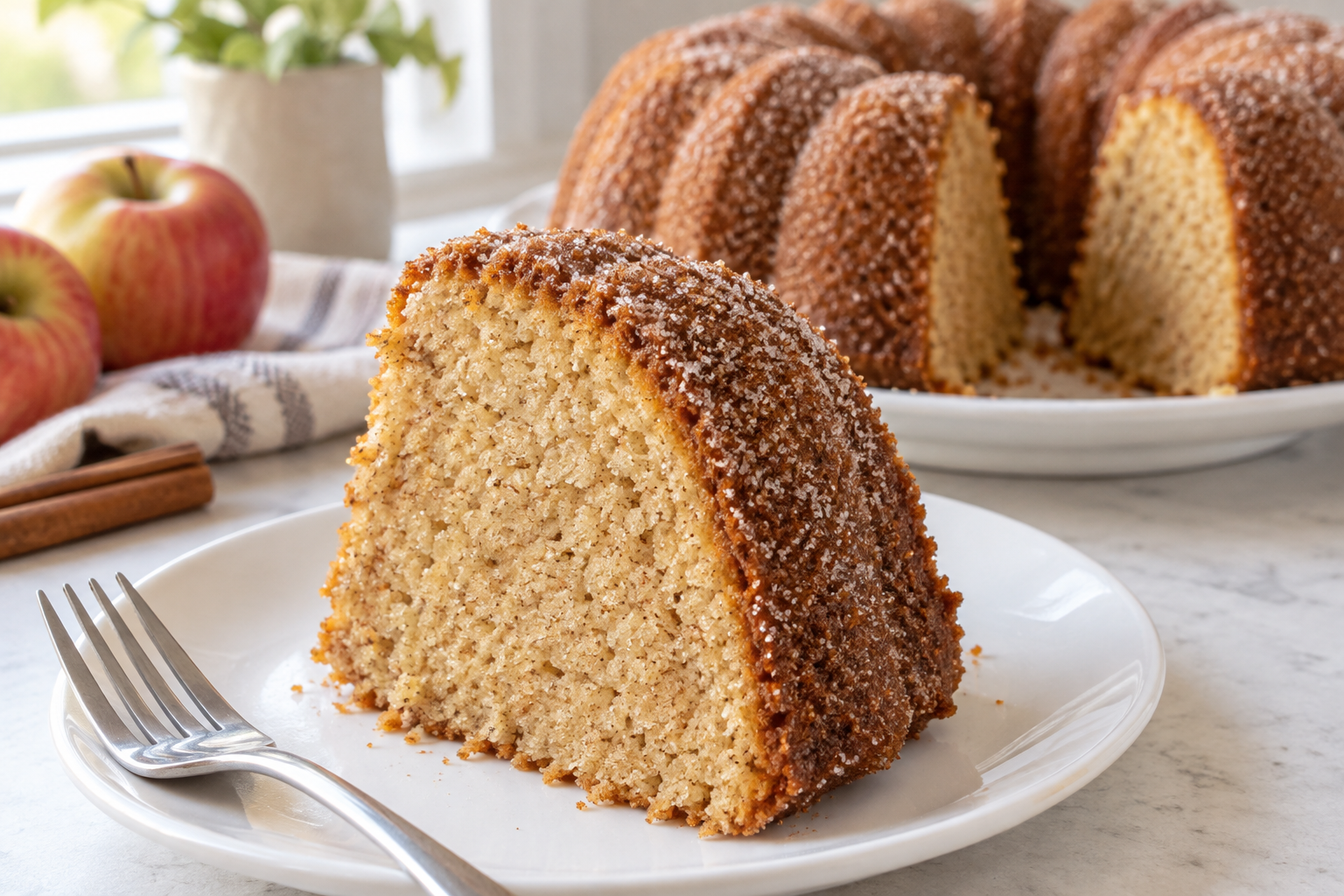
Let the coating settle before slicing with a serrated knife. Serve plain to enjoy the cider and cinnamon, or add a spoonful of whipped cream to individual servings just before eating.
Substitutions and simple variations
- Apple juice: unsweetened apple juice can replace cider, reduced from 2 cups to 1 cup the same way. Expect a lighter, less rounded apple flavor.
- Sour cream: plain full-fat Greek yogurt is a reasonable equal-volume substitute, though the crumb may be slightly different. Avoid thin yogurt, which changes the batter’s moisture.
- Salted butter: use it in the batter and reduce the added salt to 1/2 teaspoon. Salt content varies by brand; unsalted butter is still preferred for the coating.
- Spices: leave out the nutmeg if you prefer a cinnamon-only cake. Keep the cinnamon sugar on the outside for the donut-style finish.
- Gluten-free baking: a cup-for-cup baking blend is a possible starting point, but this variation has not been tested here. Almond flour and coconut flour are not direct replacements.
Keep chopped apples, nuts, and heavy swirls out of this batter if you want the fine crumb described here. They change the moisture and structure. For a cake built around fruit pieces and streusel, try Apple Crumb Cake.
Troubleshooting
| Problem | Likely cause | What helps |
|---|---|---|
| Cake sticks to the pan | An ungreased flute or center tube, worn pan coating, or unmolding too soon. | Grease every surface just before filling and rest the baked cake 15 minutes before turning it out. |
| Center is gummy or sinks | Too much liquid, underbaking, or vigorous mixing after flour is added. | Measure the finished reduction to exactly 1 cup, fold gently, and check the thickest part in two places. |
| Cake seems dry | Packed flour or baking longer than needed. | Spoon and level flour and begin checking at 45 minutes. Let doneness cues guide you. |
| Sugar coating looks wet or patchy | Cake was too hot or butter was applied unevenly. | Cool until warm, brush a thin layer of butter in sections, then press on the sugar. |
| Apple flavor is faint | Very mild cider or a reduction that stopped too early. | Use flavorful cider and measure the final volume; color alone is not a reliable guide. |
For more help with pan preparation and release, see King Arthur Baking’s Bundt-pan tips. A little care around the center tube matters just as much as greasing the outer flutes.
Storage, freezing, and make-ahead tips
Cool the cake completely before covering so trapped steam does not wet the sugar. Keep it airtight at cool room temperature for up to 2 days, or refrigerate for up to 5 days. In a hot kitchen, choose the refrigerator. The cinnamon-sugar coating gradually softens, so the first day gives the best contrast.
For longer storage, wrap individual slices and place them in a freezer-safe container for up to 2 months for best quality. Thaw while wrapped in the refrigerator, then let a serving lose its chill before eating. To warm a slice, microwave in short 10-second bursts; warming will soften the sugar crust.
Make ahead: reduce the cider up to 2 days ahead, refrigerate it covered, then bring it toward room temperature before mixing. Recheck that you have 1 cup. You can also bake the cake the day before serving. For the freshest coating after freezing, freeze the cake uncoated, thaw completely, and then brush with melted butter and add cinnamon sugar.
Apple cider donut cake FAQs
Can I skip reducing the cider?
Reducing it is the main flavor-building step. Replacing the reduction with 1 cup of regular cider keeps the liquid volume similar but makes the apple flavor milder. Do not pour the full 2 cups of unreduced cider into the batter.
Can I use bottled boiled cider?
Bottled boiled cider is often much more concentrated than this recipe’s two-to-one reduction. It is not a cup-for-cup substitute. Use regular cider and reduce it to the measured volume for this version.
Does this cake taste exactly like a fried donut?
It has the cider, warm spices, and cinnamon-sugar finish associated with apple cider donuts, but its texture is a tender baked cake. It will not have a fried crust.
Can I use a smaller Bundt pan or a loaf pan?
Use the specified 12-cup Bundt pan for this batch. Smaller pans can overflow, and a loaf has a different batter depth and baking time. Do not transfer the entire batch to one loaf pan.
Do I need to peel or chop any apples?
No. Cider and unsweetened applesauce provide the apple ingredients. The finished crumb should be smooth, with no apple chunks.
Can I leave off the cinnamon sugar?
Yes, the cake can be served plain. The butter-and-sugar coating is what gives this version its donut-style finish, so expect a different eating experience without it.
More apple baking ideas
If you have extra cider, these soft and chewy apple cider cookies use a reduction for another fall bake. For a glazed sheet-pan option, choose the Apple Fritter Cake linked above; for a crumb topping, choose Apple Crumb Cake.
Apple Cider Donut Cake recipe card
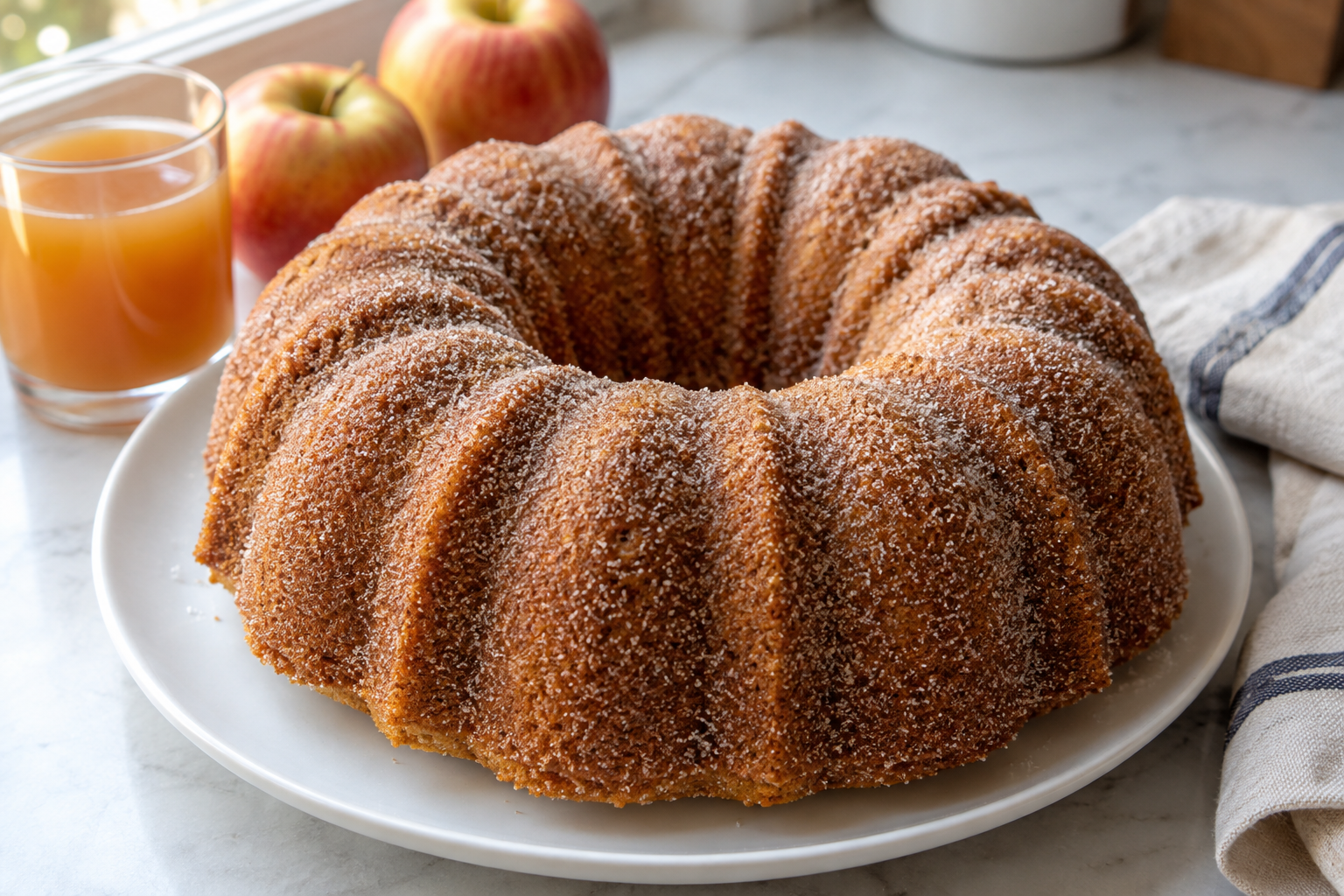
Apple Cider Donut Cake
Ingredients
Method
- Pour 2 cups apple cider into a medium saucepan. Bring to a gentle boil, then simmer uncovered over medium-low heat for about 20 to 30 minutes, stirring occasionally, until reduced to 1 cup. Carefully pour into a heatproof measuring cup to check the volume. If you have more than 1 cup, return it to the pan and simmer longer; if slightly under, add fresh cider to reach 1 cup. Cool for about 15 minutes, until lukewarm rather than hot.
- Heat the oven to 350°F with a rack in the lower-middle position. Use a 12-cup Bundt pan. Just before filling, thoroughly coat every flute and the center tube with baking spray containing flour, or brush with shortening and dust lightly with flour, tapping out excess. Do not use the cinnamon sugar to line the pan.
- Whisk the flour, baking powder, baking soda, 2 teaspoons cinnamon, nutmeg, and salt in a large bowl. Spoon flour into the measuring cups and level it rather than scooping a packed cup from the bag.
- In another large bowl, whisk the 1/2 cup melted butter, oil, 1 cup granulated sugar, and brown sugar until blended. Whisk in the eggs one at a time, followed by the applesauce, sour cream, vanilla, and all of the cooled 1 cup reduced cider. Small sour cream lumps are fine; break up large ones.
- Add the wet mixture to the dry ingredients. Fold gently with a spatula just until no dry flour remains, scraping the bottom of the bowl. Avoid beating the batter smooth. Spoon into the prepared pan and level the surface. Leave at least one-third of the pan empty for rising; never fill above two-thirds full.
- Bake for 45 to 55 minutes, starting checks at 45 minutes. A skewer inserted into the thickest part of the ring should come out clean or with a few moist crumbs, not wet batter. Check a second spot. The surface should spring back lightly. If the cake browns too quickly, loosely cover it with foil and continue baking in 5-minute intervals until done.
- Set the pan on a wire rack for 15 minutes. Gently loosen only the accessible outer edge and center tube with a thin silicone spatula. Place a rack over the pan, hold both securely with oven mitts, and invert. Lift the pan gently. Let the unmolded cake stand for another 10 minutes, until warm and sturdy enough to handle.
- Stir 1/2 cup granulated sugar with 1 1/2 teaspoons cinnamon. Set the rack over a rimmed baking sheet. Brush the warm cake’s top, outer sides, and inner ring with the 4 tablespoons melted butter, working in small sections and immediately spooning or gently pressing on cinnamon sugar. To coat the flat base, carefully invert the sturdy cake onto a second rack, brush and sprinkle the base, then turn it upright again. Support it with racks rather than holding a hot cake in your hands. Let stand at least 10 minutes before slicing into 12 servings.