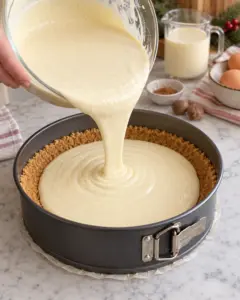
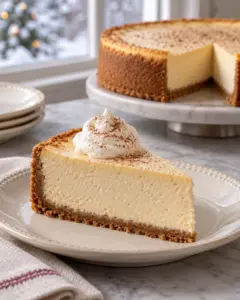
This eggnog cheesecake pairs a creamy baked filling with a buttery graham cracker crust and a hint of nutmeg. It works well as a make-ahead Christmas or holiday cheesecake because it needs several hours in the refrigerator before slicing. The hands-on steps are simple: press the crust, mix the filling gently, bake, cool gradually, and chill.
This version uses an unbaked, pressed crust. There is no separate crust-baking step. A 9-inch springform pan makes it easy to release the chilled cake, and a rimmed baking sheet makes the pan easier to move.
Table of Contents
Why this eggnog cheesecake recipe works
- Refrigerated, pasteurized, nonalcoholic eggnog gives the filling its seasonal flavor without adding a separate sauce.
- Mixing the eggs on low speed avoids whipping extra air into the filling, which can contribute to a cracked surface.
- Gradual cooling and a full chill give the slices time to firm up before you remove the springform ring.
Ingredients for eggnog cheesecake
Graham cracker crust
- Graham cracker crumbs: 1 1/2 cups, finely crushed.
- Granulated sugar: 1/4 cup.
- Unsalted butter: 1/2 cup, melted.
Creamy eggnog filling
- Cream cheese: Four 8-ounce packages, fully softened.
- Granulated sugar: 1 cup.
- Eggs: 3 large eggs.
- Eggnog: 1 cup refrigerated, pasteurized, nonalcoholic commercial eggnog.
- Ground nutmeg: 1 teaspoon.
- Vanilla extract: 1 teaspoon.
- To serve, optional: Plain whipped cream and a light sprinkle of ground cinnamon.
Use a 9-inch springform pan, parchment paper, a rimmed baking sheet, bowls, a mixer, a spatula, and a cooling rack. Softened cream cheese blends more smoothly, but keep the eggnog refrigerated until you measure it.
How to make easy eggnog cheesecake
1. Prepare the pan and unbaked crust
Heat the oven to 325°F with a rack in the lower-middle position. Line the removable base of the springform pan with parchment and lightly grease the inside of the ring. Stir together the crumbs, 1/4 cup sugar, and melted butter. Press the mixture firmly across the base and about 1/2 inch up the side. Refrigerate this unbaked crust while you make the filling. Set the pan on a rimmed baking sheet.
2. Mix the filling gently
Beat the softened cream cheese and 1 cup sugar until smooth, scraping the bowl. Add the eggs one at a time on low speed, mixing only until each is incorporated. Add the eggnog, nutmeg, and vanilla on low speed and stop when evenly blended. Do not whip extra air into the batter.
3. Fill and bake
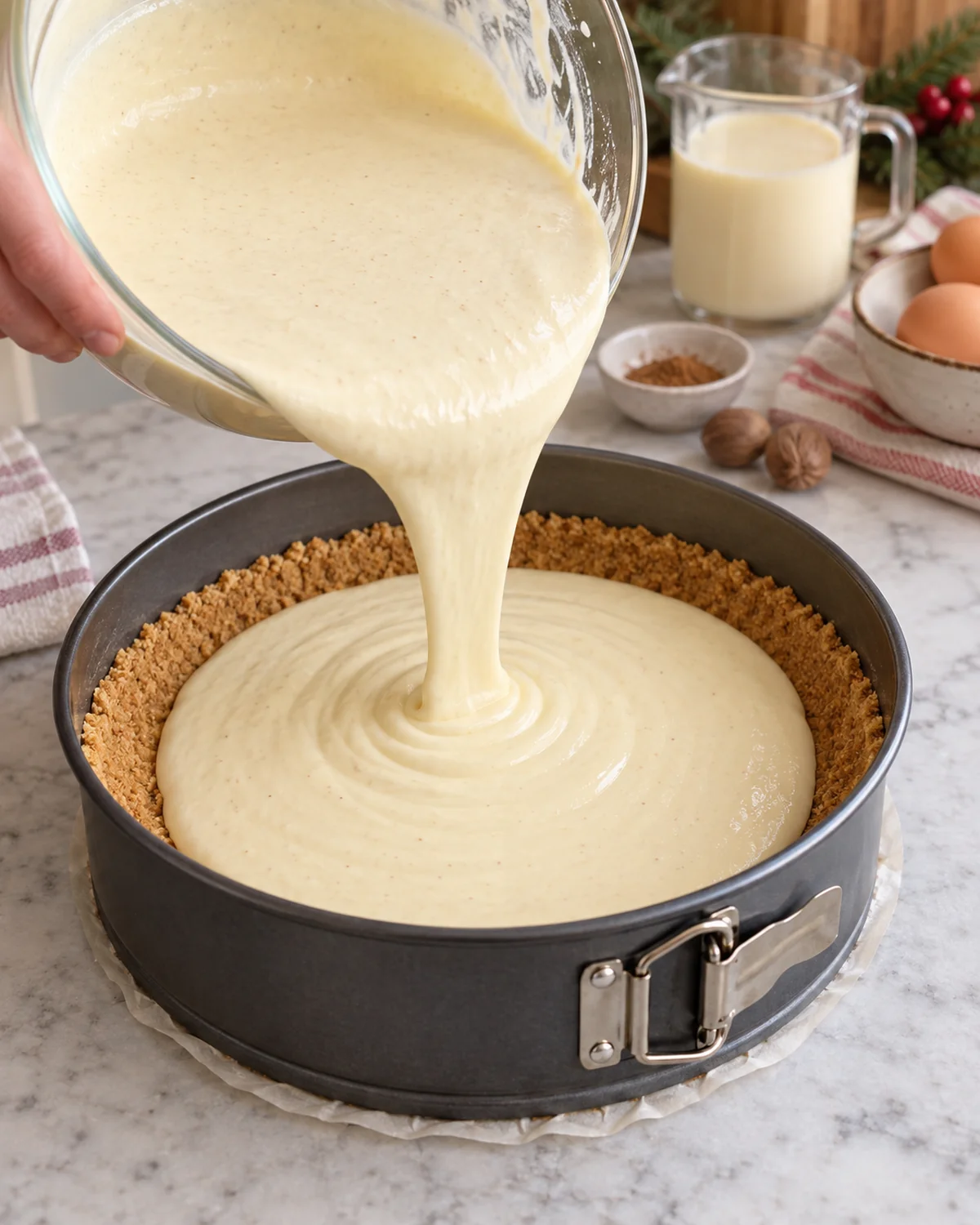
Pour the filling over the chilled crumb crust and smooth the top. Bake for about 55 to 65 minutes. The outer 2 to 3 inches should look set while the center still has a small, gentle wobble, not liquid movement. If you use a food thermometer, check the center for 160°F, the safe temperature listed for egg dishes. Avoid repeatedly opening the oven or waiting until the center is rigid.
For the egg-temperature guidance, see FDA egg safety advice. Use a clean thermometer and avoid touching the pan with its tip.
4. Cool gradually and chill
Turn off the oven, open its door a few inches, and leave the cheesecake inside for 1 hour. Move the pan to a rack for about 30 minutes. Loosen the edge with a thin knife, cover, and refrigerate within 2 hours of the end of baking. Chill at least 4 hours, preferably overnight, before removing the ring. Cooling gradually helps reduce a sudden temperature change that can encourage cracks.
5. Slice and serve
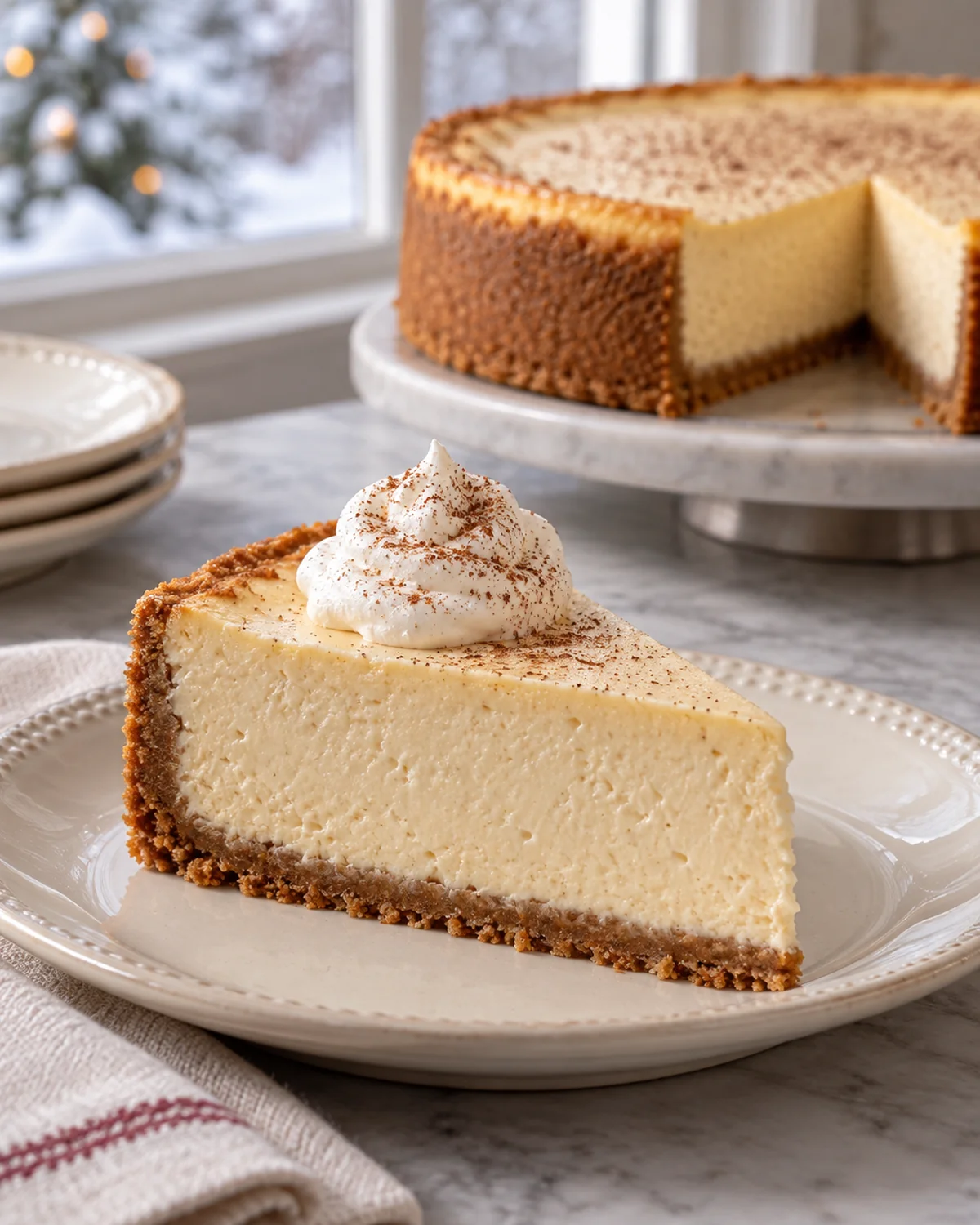
Release the ring carefully. For tidy slices, dip a knife in hot water and wipe it between cuts. Cut into 12 slices. Add a little plain whipped cream and ground cinnamon just before serving if you like.
Plan on about 25 minutes of preparation, 60 minutes of baking, 1 hour in the switched-off oven, 30 minutes on a rack, and at least 4 hours of refrigeration. The minimum estimated total is 6 hours 55 minutes. Overnight chilling gives you a convenient make-ahead schedule.
Tips for a smooth, crack-resistant cheesecake
- Use fully softened cream cheese and scrape the bowl before adding eggs so the filling does not have lumps.
- After the eggs go in, mix on low only until combined. Extra air can make the cake rise and then split as it cools.
- Bake the springform pan on a rimmed sheet, but do not add a water bath; this recipe’s timing and method do not call for one.
- Cool in the switched-off oven with the door ajar, then chill thoroughly before releasing the ring. A small surface crack does not affect the flavor.
Substitutions and variations
Gluten-free graham crackers may be an option for the crust, but check the package and expect a different crumb texture. Dairy-free cream cheese or eggnog, vanilla custard, and reduced-fat cream cheese can substantially change the filling’s water and fat content, so they are not guaranteed one-for-one swaps in this baked cheesecake. Keep the optional whipped cream and cinnamon off until serving for the neatest make-ahead finish.
Storage and make-ahead
Cover and refrigerate the cheesecake within 2 hours after baking, then use it within 3 to 4 days. Keep it chilled between servings. The FDA’s holiday food-safety guidance recommends prompt refrigeration and using leftovers within 3 to 4 days.
You can bake it the day before a gathering and leave it covered in the refrigerator overnight. For longer storage, wrap plain slices without whipped cream tightly and freeze for up to 2 months for best quality. Thaw in the refrigerator, then add toppings just before serving.
Troubleshooting
Why did my cheesecake crack?
A cake may crack if the filling was beaten vigorously after adding eggs, baked until the center was completely firm, or cooled abruptly. Mix gently and follow the gradual-cooling steps. Covering a cooled crack with whipped cream is optional; it does not change the recipe.
Why is the center runny?
The center should have a gentle wobble at the end of baking, not a liquid ripple. If it still looks wet, bake for another 5 minutes and check again. Then give it the full refrigerator chill before cutting.
Why are there cream-cheese lumps?
Cold cream cheese is harder to blend. Let it soften before mixing and scrape the bowl well before adding the eggs.
Frequently asked questions
Do I need to pre-bake the graham crust?
No. This recipe uses a pressed, chilled crust that bakes together with the filling. The recipe card follows the same method.
Can I make this holiday cheesecake the day before?
Yes. An overnight chill makes serving easier. Add whipped cream and cinnamon just before you cut and serve.
Can I use homemade eggnog?
The recipe is written for refrigerated, pasteurized, nonalcoholic commercial eggnog. Homemade versions vary in sweetness, thickness, and egg handling, so they are not a tested equivalent here.
More eggnog desserts
If you want a baked cake with less chilling time, try the eggnog Bundt cake with glaze. For small make-ahead holiday sweets, see the white-chocolate eggnog fudge.
Eggnog cheesecake recipe card
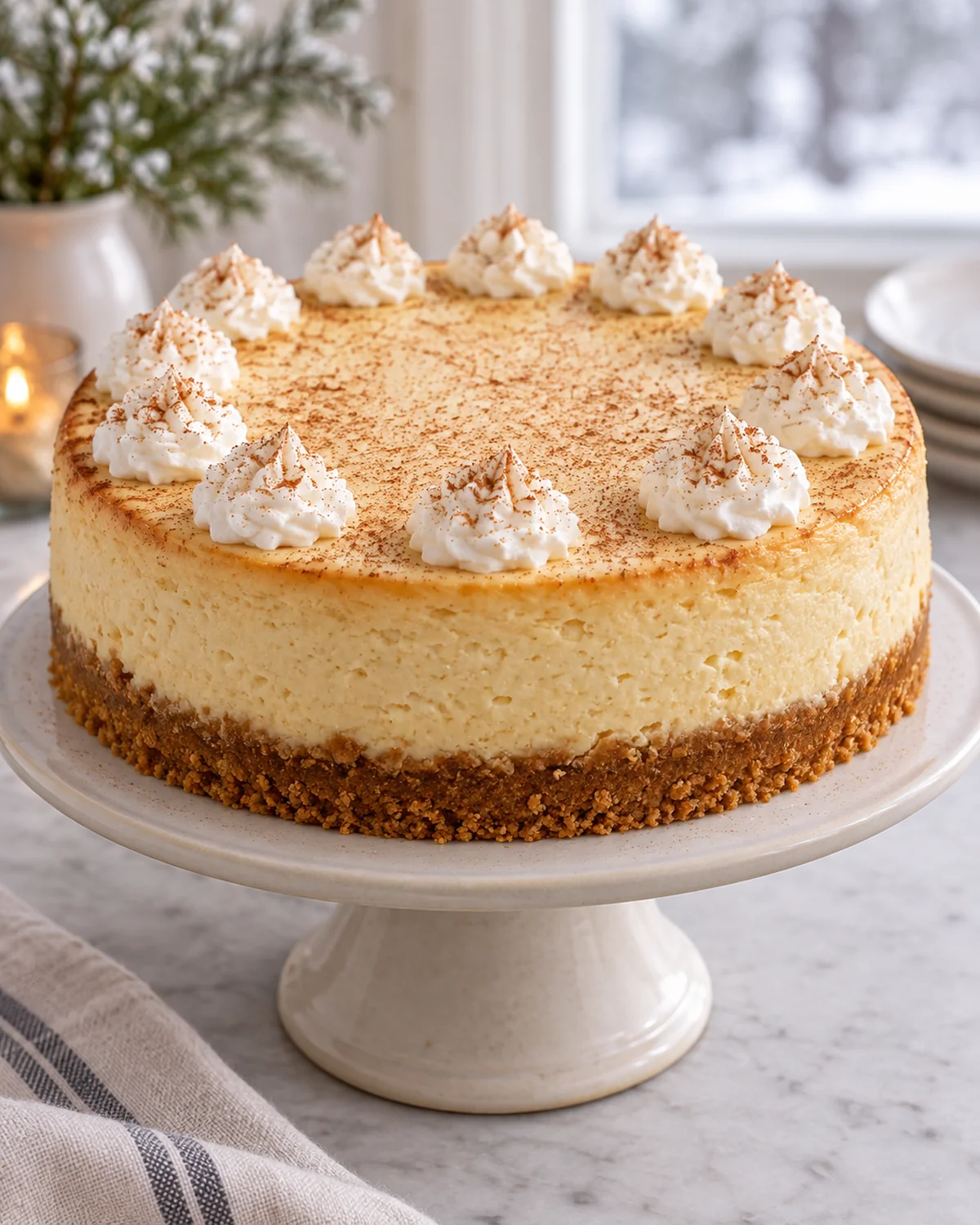
Eggnog Cheesecake
Ingredients
Method
- Heat the oven to 325°F with a rack in the lower-middle position. Line the removable base of a 9-inch springform pan with parchment and lightly grease the inside of the ring. Set the pan on a rimmed baking sheet. No water bath is needed for this method.
- Mix 1 1/2 cups graham cracker crumbs, 1/4 cup sugar, and 1/2 cup melted butter until evenly moistened. Press firmly over the pan base and about 1/2 inch up the side. Refrigerate the unbaked crust while you mix the filling. Do not pre-bake it.
- Beat four softened 8-ounce packages of cream cheese with 1 cup sugar until smooth, scraping the bowl. Add 3 large eggs one at a time on low speed, mixing just until each disappears. Mix in 1 cup refrigerated, pasteurized, nonalcoholic eggnog, 1 teaspoon ground nutmeg, and 1 teaspoon vanilla on low only until combined. Avoid whipping extra air into the batter.
- Pour the filling over the cold crust and smooth the surface. Bake on the rimmed sheet for about 55 to 65 minutes. The outer 2 to 3 inches should look set while the center has a small, gentle wobble rather than liquid movement. If checking with a food thermometer, the center should reach 160°F for an egg dish. Avoid repeatedly opening the oven and do not bake until the center is completely rigid.

- Turn off the oven, crack the door a few inches, and leave the cheesecake inside for 1 hour. Transfer the pan to a rack and cool about 30 minutes more. Loosen the edge with a thin knife, cover, and refrigerate within 2 hours of finishing the bake. Chill at least 4 hours, preferably overnight, before removing the ring.
- Release the springform ring carefully and cut into 12 slices with a knife dipped in hot water and wiped between cuts. If desired, add whipped cream and a light sprinkle of ground cinnamon just before serving. Keep the cheesecake chilled when not serving.